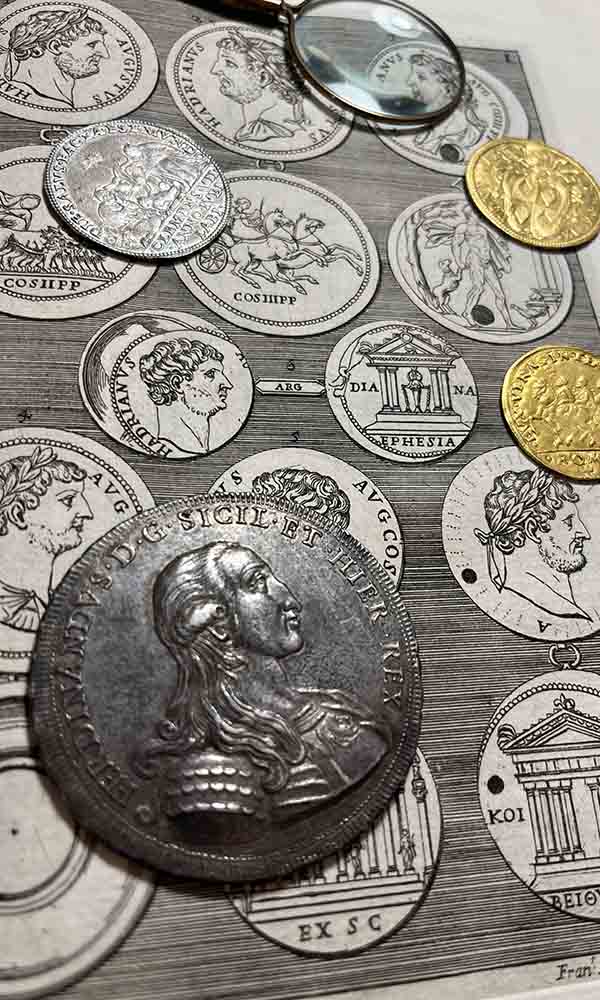


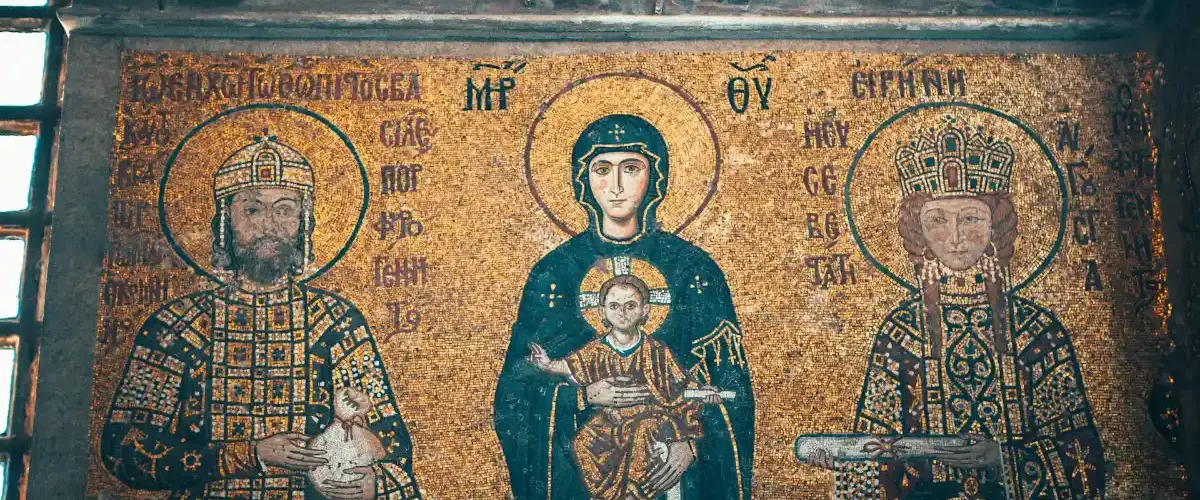
Dear readers Numismatica Ranieri, today we will offer you interesting information in regard to the coinage of the byzantine. We will follow the same style used in the article dedicated to the Greek coins provide you with useful historical background, indications on byzantine coins and their value over that list of the byzantine emperors, who did beat money during their empire. If you want to evaluate the purchase of rare coins as an investment, we invite you to visit the following sections of our web site: coins, gold investment, online store and auctions of numismatic, where you will certainly find some value opportunities. Good read.
Byzantine coinage
As rightly pointed out by professor Bernareggi, it is not always possible to match the historical periods with those numismatists. Therefore, some scholars of the past have thought that it was Arcadius (383 d.C.) the founder of this empire, which lasted approximately 1000 years and ended in the FIFTEENTH century, and, more precisely, in 1453 after the fall of its capital, Constantinople in the hands of the Turks. More recent studies have indicated Anastasio as the first emperor, and the 491 d.C. it is therefore considered the beginning of the byzantine empire.
In 1204 the Capital city suffered a first fall and the byzantines once out of the city fled in all directions, giving rise to the different empires that only in 1261, with Michael VII, were gathered again.
To the west of Greece, was born the despotate of Epirus, founded by Michael I, while in Asia Minor Teodoro Lascaro, who assumed the name of Theodore I, he organized a slim empire centralized in the city of Nicaea.
In 1224 another Teodoro won the Latin kingdom of Thessalonica, and after his coronation, he contrasted this empire to that of Nicaea.
The rulers of the latins formed an alliance with the powerful John of Bulgaria, who defeated Theodore, who abdicated in favour of his son John. Lost this war, Thessaloniki was forced to recognize the suzerainty of Nicaea. The last of the kingdoms that gave to the muslims was that of Trebizond, founded also in 1204, by Alessio I. During its first century of existence, the kingdom of Trebizond prospered, but from 1330 to the 1390s, he knew, only the civil wars and disasters. In spite of its last ruler, David, had been virtually subject to the orders of the Sultan, he was not able to object when, 6 years after the fall of Constantinople,
the muslims decided to incorporate this territory to the kingdom of Mohammed.
Perhaps the style misunderstood, perhaps the little variety of types coin, or more likely the request of a culture superior are the cause of the small number of collectors in Italy.
The fact is that a solid, a unit of value, gold, is sold around 350 euro and a semisse (1/2 solid )or a tremisse (1/3 solid), the figures are lower.
The solid was gradually produced in the specimens lighter, called the tetarteron, or ladled out (hystamenon nomisma). Also the title is sometimes deeply and are therefore rare specimens in electro.
With respect to the coinage of the roman changed the way of portraying the emperor, no longer the profile, but from the front. Obvious that even the reverse underwent changes and the personifications of roman origin and was a favourite of the victory, often depicted in the act of holding a long cross.
More interesting, also because they are more rare, is silver. Miliarensi and siliques (not multiples and submultiples) are the types of coin issued.
In this metal were minted many coins with the reverse a monogram to indicate the name of the Emperor
Both in gold and in silver it's easy to find the depiction of Christ in blessing, sometimes sitting, or a large cross placed on some steps.
As a unit of the base of the bronze age, we find the nummo, and several multiple, recognizable by the presence of letters that indicate the value:
- CN = 250;
- PKE = 120;
- M = 40;
- ΛΓ = 33;
- Λ= 30;
- K =20;
- IS =16;
- IB =12;
- I =10;
- H =8;
- S=6;
- E=5;
- Δ=4;
- Γ =3;
- B=2.
Other coins, more simply, to indicate the value in roman numerals (X = 10; XX=20; XXX=30; XXXX=40).
The nummo does not show a sign of value, but almost always a monogram; the 40 nummi is known as the follis.
The byzantine emperors coin
Here is the list of the emperors who have beaten the Coin of Anastasius I (491-518) John IV (1446-1457) between brackets the years of the kingdom.
- Anastasius I (491-518)
- Justin (518-527)
- Justinian I (527-565)
- Justin II (565-578)
- Tiberius II Constantine (578-582)
- Maurizio Tiberio (582-602)
- Theodosius (590-602)
- Phocas (602-610)
- Heraclius (610-641)
- Heraclius Constantine (641)
- Eracleona (641)
- Constant (641-668)
- Mezezio (668-669)
- Constantine IV (668-685)
- Justinian II (685-695 and 705-711)
- Leonzio (695-698)
- Tiberius III (698-705)
- Philippicus (711-713)
- Anastasius II (713-715)
- Theodosius (715-717)
- Leo III (717-741)
- Artavasdo (742-743)
- constantine V (741-775)
- Leo IV (775-780)
- Constantine VI (780-797)
- Irene (797-802)
- Nicephorus I (802-811)
- Michael I (811-813)
- Leo V (813-820)
- Michael 11 (820-829)
- Theophilus (829-842)
- Michael III (842-867)
- Basil (867-886)
- Leo VI (886-912)
- Alexander (912-913)
- Constantine VII (913-959)
- Roman II (959-963)
- Nicephorus II (963-969)
- John I (969-976)
- Basil II (976-1025)
- Constantine VIII (1025-1028)
- Roman III (1028-1034)
- Michael IV (1034-1041)
- Zoe (1041)
- Michele V (1041-1042)
- Constantine IX (1042-1055)
- Theodora (1055-1056)
- Michael VI (1056-1057)
- Isaac I (1057-1059)
- Constantine X (1059-1067)
- Eudocia (1067)
- Roman IV (1068-1071)
- Michael VII (1071-1078)
- Nicephorus III (1078-1081)
- Nicephorus Basilacio (1078)
- Nicephorus Melisseno (1080-1081)
- Alexius I (1081-1118)
- John II (1118-1143)
- Manuel I (1143-1180)
- Alexy II (1180-1183)
- Andronicus I (1183-1185)
- Isaac Comnenus (1184-1191)
- Isaac II (1185-1195)
- Alessio III (1195-1203)
- Isaac II and alexius IV (1203-1204)
- Alessio V (1204)
- Michael VIII (1261-1282)
- Andronicus II (1282-1328)
- Michael IX (with Andronicus 1320)
- Andronicus III (1328-1341)
- John V (1341-1391)
- John VI (1353-1354)
- Andronicus IV (1376-1379)
- Manuel II (1391-1423)
- John VII (1390)
- John VIII (1423-1448)
- Constantine XI (1448-1453)
The empire of Nicaea
- Theodore I (1208-1222)
- John III (1222-1254)
- Theodore II (1254-1258)
- Michael VIII (1258-1261)
The empire of Thessalonica
- Teodoro (1224-1230)
- Manuel (1230-1237)
- John (1237-1242)
The despotate of Epirus
- Michael I (1204-1215)
- Manuel (1230-1237)
- Michael II (1237-1271)
Empire of Trebizond
- Andronicus I (1222-1235)
- Manuel I (1238-1263)
- Giorgio (1266-1280)
- John II (1280-1297)
- Alessio (with John; 1297 )
- Theodora (1285)
- Alexy II (1297-1330)
- Andronicus III (1330-1332)
- Manuel II (1332)
- Basil II (1332-1340)
- John III (1342-1344)
- Michele (1344-1349)
- Alessio III (1349-1390)
- Manuel III (1390-1417)
- Alessio IV (1417-1446)
- John IV (1446-1458)
Conclusions
Hoping to have offered something interesting in relation to the coinage of the byzantine period, please contact us for any information or further details. The official email address is: info@numismaticaranieri.it